
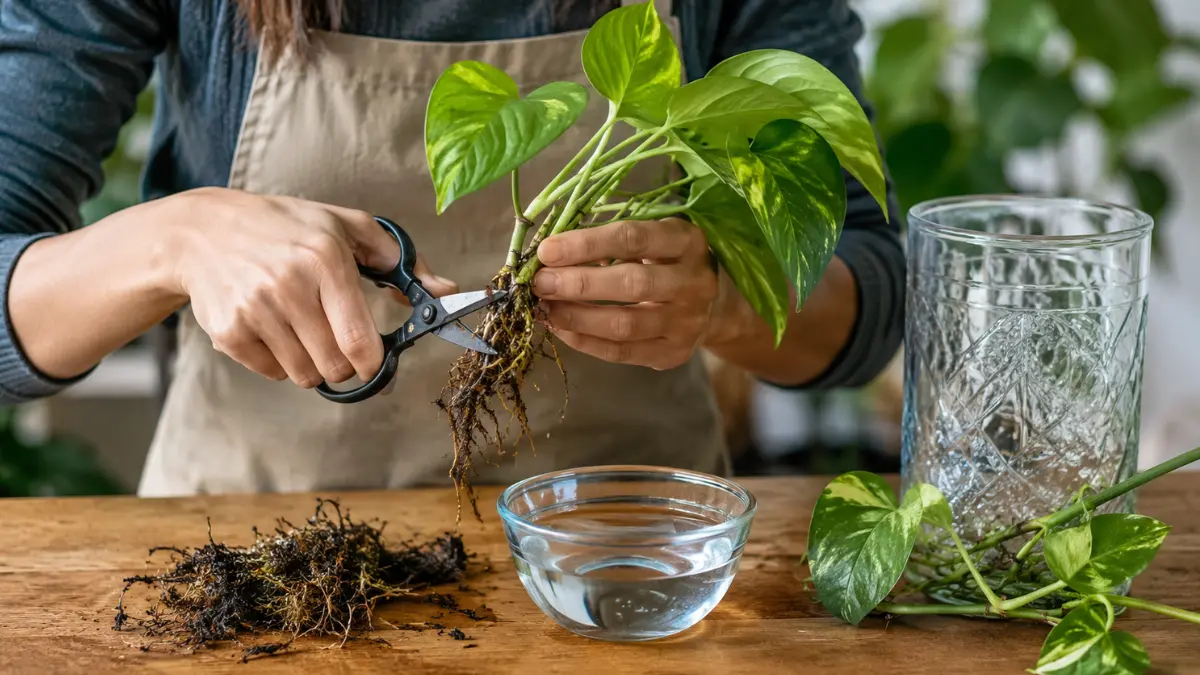
A money plant with root rot in water can survive when part of the stem remains firm and at least one healthy node remains unaffected. Remove the plant from the container, cut away every soft or decomposing root, inspect the lower stem, clean the container, and place the remaining healthy roots or a healthy node in fresh water.
Do not judge the plant by root colour alone. Healthy water-grown roots may appear white, cream, tan or light brown as they mature. Root rot becomes more likely when the roots feel mushy, slimy, hollow or weak and the water develops an unpleasant smell.
How to Tell Whether the Roots Are Actually Rotting
Dark roots do not always mean that a money plant has root rot. Older water roots often become tan or brown while remaining healthy and functional.
Healthy roots usually:
- Feel firm when touched
- Hold their shape when moved
- Remain attached to the stem
- Have solid tissue beneath the surface
- Produce pale new root tips
- Have little or no unpleasant smell
Rotten roots usually:
- Feel soft, mushy, or slippery
- Collapse when touched
- Look hollow or flattened
- Break away with little pressure
- Release their outer layer when handled
- Smell sour, musty, or rotten
- Appear beside black or soft stem tissue
Inspect the texture before cutting anything. Removing firm roots only because they look brown can weaken a plant that still has a functioning root system.
The foliage may also show signs of root damage. Several leaves may yellow, droop, or lose firmness because damaged roots can no longer support the vine properly. A separate guide on money plant leaves turning yellow in water explains other causes of yellow foliage that can occur even when the roots remain healthy.
Why Money Plant Roots Rot in Water
A money plant can produce roots in water, but the container still needs clean conditions. The plant does not benefit from water that remains warm, dirty, crowded with decaying tissue, or unchanged for long periods.
Root decay can spread when dead roots, fallen leaves, or decomposing stem material remain in the container and contaminate the water.
Problems may also begin when:
- Leaves remain below the water surface
- Too much of the stem stays submerged
- The container receives strong direct sunlight
- The water becomes warm for several hours each day
- A damaged cutting enters an unclean container
- Rot spreads from one unhealthy cutting to another
- The plant remains in cloudy or foul-smelling water
- The container receives too much fertiliser
A money plant growing in water does not develop root rot simply because water surrounds its adapted roots. The problem begins when roots or stems become damaged and start decomposing or when unhealthy conditions allow the decay to spread.
Remove the Money Plant From the Container
Take the plant out of the water before deciding how much tissue needs removal. Trying to examine the roots through the glass can hide damage where the roots overlap.
Support the vine with one hand and lift it gently. Do not pull forcefully if the roots have wrapped around the container or become tangled with other cuttings.
Rinse the roots under clean, gently running water. This removes slime and loose material that can make healthy roots appear worse than they are.
Place the plant on a clean surface and separate the roots carefully. Check each root from its tip to the point where it joins the stem.
Keep the plant away from hot sunlight while working. Complete the inspection in a shaded indoor location.
Which Rotten Roots Should You Cut?
Cut only roots that show clear physical decay. Keep any root that feels firm, even when its colour has changed from white to tan or brown.
Use clean, sharp scissors or pruning snips. Disinfect the blades before cutting so the tool does not transfer contaminated material to healthy tissue.
Remove a root when it:
- Feels mushy throughout
- Has a soft blackened section
- Collapses between the fingers
- Has become hollow
- Smells rotten
- Separates easily from its outer covering
- Breaks away from the stem without resistance
Trace each damaged root back toward firm tissue. Make the cut slightly above the soft section rather than leaving a decomposing piece attached.
Do not repeatedly cut into healthy roots to make them look clean or uniform. The plant needs every functioning root that remains.
Rinse the root system again after trimming. Remove all loose fragments so they do not enter the clean container.
Check Whether the Rot Has Entered the Stem
Root damage becomes more serious when decay reaches the lower stem. A money plant cannot recover through a section of stem that has become black, soft, watery, or hollow.
Hold the stem near the former waterline and press it gently. Healthy stem tissue should feel firm and maintain its shape. A rotting stem often bends, collapses, peels, or releases liquid under light pressure.
Look for:
- A black or dark brown patch near the waterline
- A narrow or weak section of stem
- Soft tissue around a node
- Skin separating from the inner stem
- A sour or rotten smell
- Decay moving upward from the roots
When the lower stem remains firm, remove the rotten roots and keep the healthy stem intact.
When part of the stem has started rotting, cutting the roots alone will not stop the problem. Cut away the damaged stem section as well.
How to Cut Above Stem Rot
Find the highest visible or soft area of decay. Move upward until the stem feels completely firm and shows normal colouring.
Make one clean cut through healthy tissue above the damaged section. Inspect the cut surface. It should look firm and evenly coloured rather than brown, translucent, or water-soaked.
Cut slightly higher when the centre still looks discoloured. Leaving a small amount of damaged tissue can allow the rot to continue spreading.
The rescued section must contain at least one healthy node. A node is the raised point where a leaf, aerial root, or new growth can develop. A bare piece of stem without a node cannot produce a new root system.
Remove any leaf that would sit underwater after the cutting returns to the container. Keep the node below the waterline while keeping the remaining leaves above it.
Clean the Container Before Returning the Plant
Do not place the trimmed plant back into the same dirty water. The old container may still contain slime, dead root fragments, or decomposing plant material.
Empty the container completely. Wash it with dish soap and a clean bottle brush, paying attention to the bottom and inner sides.
Rinse the container several times until no soap remains. Soap residue can damage new roots, so the glass should have no foam, fragrance, or slippery coating after rinsing.
A transparent glass container makes future inspection easier. It allows the roots and water condition to remain visible without repeatedly disturbing the plant.
Do not combine the recovering plant with unhealthy cuttings. Keep it in a separate clean container until it produces firm new roots and shows no further decay.
Return the Healthy Plant to Fresh Water
Fill the clean container with fresh water at room temperature. Avoid very hot or ice-cold water because sudden temperature changes can stress the remaining tissue.
Position the plant so that:
- Healthy roots remain underwater
- At least one healthy node remains underwater when rerooting is necessary
- All leaves remain above the water
- Most of the stem remains above the waterline
- The plant stands securely without crushing the roots
Do not fill the container up to the leaves. Submerged leaves soften and decay, which can contaminate the water again.
The container should hold enough water to cover the active roots without submerging an unnecessary length of stem.
Place the recovering plant in bright, indirect light. Keep it away from harsh afternoon sunlight, hot window glass, room heaters, and direct air-conditioner airflow.
Should You Add Fertiliser After Cutting Rotten Roots?
Do not add fertiliser immediately after removing root rot. A damaged plant needs clean, stable conditions before it needs additional nutrients.
Fertiliser cannot repair rotten roots. A strong or poorly diluted product may place further stress on the limited healthy tissue that remains.
Do not add tea, coffee, sugar, milk, banana peel water, rice water, or other kitchen mixtures to the container. These materials can decompose and make the water less suitable for recovering roots.
Hydrogen peroxide, cinnamon, and other popular remedies should not replace the physical removal of rotten tissue and proper container cleaning. A soft, decomposing root cannot become healthy again.
What to Do During the First Two Weeks
Check the plant regularly without removing it from the container every day. Repeated handling can damage fragile new root tips and prevent the cutting from settling.
Replace the water when it becomes cloudy, develops an odour, or collects loose plant material. Clean water matters more than following a rigid changing schedule.
During the early recovery period:
- Keep the plant in stable indirect light
- Maintain a comfortable indoor temperature
- Remove fallen plant material promptly
- Keep the leaves above the water
- Avoid fertiliser
- Avoid moving the plant between different locations
- Watch the remaining stem for new soft areas
A plant that has lost many roots may droop temporarily. Root removal reduces its ability to support the existing leaves, but temporary drooping does not always mean that the rescue has failed.
Do not remove every leaf unless the leaves have become fully yellow, black, or soft. Healthy leaves help the remaining cutting produce energy while new roots develop.
Signs That the Money Plant Is Recovering
The condition of the roots and stem provides a better recovery signal than the appearance of old damaged leaves.
Positive signs include:
- The water remains clear
- The container has no rotten smell
- The stem stays firm near the waterline
- Pale root tips begin to appear
- Existing healthy roots remain solid
- No additional stem tissue turns black
- Green leaves regain firmness
- A healthy node begins producing new growth
Old yellow leaves usually do not turn green again. Judge recovery by the absence of new damage and the development of healthy roots or leaves.
Growth may pause while the plant rebuilds its root system. A slowly recovering plant with a firm stem has a better chance than a rapidly changing plant with spreading softness.
Signs the Money Plant Is Beyond Recovery
A money plant may not survive when rot has spread through every available node or when the entire stem has become soft and hollow.
The plant is unlikely to recover when:
- Every root has rotted and no healthy node remains
- The stem feels soft along its full length
- Black decay has reached the top growth
- Every node has become damaged
- The vine produces a strong rotten smell throughout
- Newly cut healthy-looking tissue quickly turns brown and soft
Remove a completely decomposed plant from other cuttings. Keeping it in a shared container can expose healthy vines to dirty water and decaying material.
When even one firm section with a healthy node remains, restarting that section in clean water may save the plant. The rescue depends on removing all affected tissue rather than preserving the original root system at any cost.
A successful recovery may leave the vine shorter and with fewer roots, but a clean, healthy cutting can rebuild. Firm tissue, a viable node, clean water, and stable indirect light give the money plant its best chance to begin again.

2 thoughts on “How to Save a Money Plant With Root Rot in Water”