
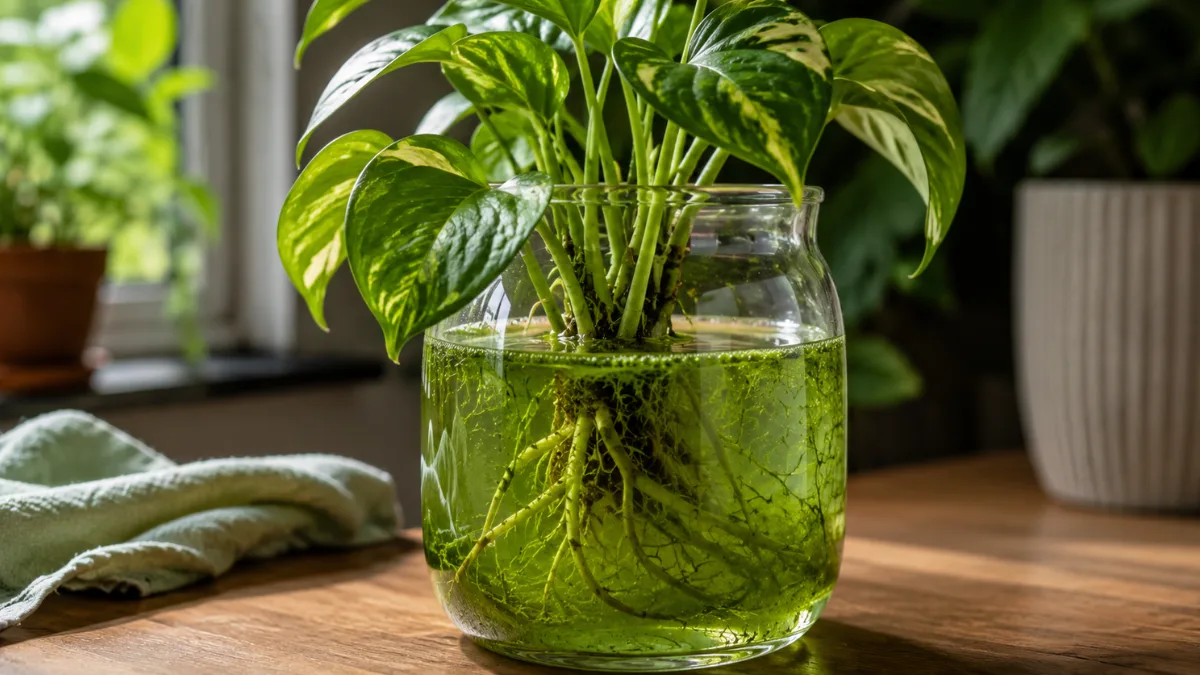
Money plant water usually turns green because algae are growing inside the container. Clear jars exposed to light develop algae more easily, especially when fertiliser, dead leaves or other plant debris remain in the water.
A light green film is usually a container-maintenance problem rather than an immediate threat to the plant. However, the jar should be cleaned before the buildup becomes thick enough to hide the roots or make the water difficult to inspect.
Is the Green Material Algae or Root Rot?
Algae usually appear as a green film on the glass, a slippery coating near the waterline or a green tint throughout the water. The roots may still feel firm even when some algae cling to them.
Root rot looks different. Damaged roots usually become soft, slimy, fragile or foul-smelling.
Do not judge the roots by colour alone. Healthy water-grown roots may become cream, tan or lightly stained as they age. Their texture and smell provide more useful clues.
When the jar contains green growth but the roots remain firm, clean the container and refresh the water.
When the roots have become soft, decomposed or unpleasant-smelling, follow the separate guide to money plant root rot in water. Cleaning algae alone will not correct damaged roots.
Why Does Algae Grow in Money Plant Water?
Algae need water, light and a small supply of nutrients. A money plant jar already contains water, while a transparent container allows light to reach the entire water column.
Nutrients may enter the container through liquid fertiliser, fallen leaves, damaged root pieces or decomposing stem tissue.
Algae are more likely to develop when:
- Direct sunlight reaches a clear jar
- The container stays beside a bright window
- Fertiliser is added too frequently
- Dead leaves remain in the water
- Loose root fragments collect at the bottom
- The jar is topped up repeatedly without being cleaned
- A thin green film remains after a partial water change
The money plant leaves need light, but the water does not need to remain fully exposed. Keeping the foliage in bright indirect light while shading the lower container can slow algae growth.
Does Green Water Harm a Money Plant?
A small amount of algae does not usually cause an immediate plant emergency. The money plant may continue growing while a thin green coating remains on the glass.
The problem becomes more important when the water turns dark green, the container develops a thick slippery layer or the roots become difficult to see.
Heavy buildup can hide early changes in the roots and stem. It may also trap dead material inside the container and make routine cleaning more difficult.
The goal is not to keep the jar completely sterile. Algae can return naturally in a wet, illuminated container.
The practical goal is to keep the water clear enough to inspect the roots and remove debris before it begins decomposing.
How Should Green Algae Be Removed From the Jar?
Prepare a clean bowl or tray before removing the plant. Support the vines so their weight does not pull against the roots.
Hold the money plant by the firm stem above the rooted section. Do not lift it by gripping the fine roots.
Rinse the roots gently with clean, room-temperature water. Remove only the algae that loosens easily.
Do not scrape the roots, scrub them with a brush or pull at material that remains firmly attached. Fine water-grown roots can break during rough cleaning.
Discard the old green water.
Wash the empty jar with warm water and a clean bottle brush or soft sponge. Clean the base, corners and waterline because algae often remain in these areas after a quick rinse.
Rinse the jar thoroughly before refilling it.
Return the plant to fresh water only after removing visible debris from the roots and container.
Keep every leaf above the water. Submerge the roots and only the stem nodes that need to remain underwater.
Should All the Green Water Be Replaced?
Replace all the water when it has turned visibly green, contains floating debris, smells unusual or leaves a thick film on the glass.
A complete water change is also appropriate after the jar has been scrubbed. Returning part of the old green water can make the cleaned container look dirty again quickly.
When the water remains clear and only the level has dropped, topping it up may be enough.
Inspect the glass, roots and submerged stem before adding more water. This is more useful than following a fixed replacement schedule.
Use water close to room temperature. Avoid exposing the roots to extremely hot or cold water.
Is Direct Sunlight Turning the Water Green?
Direct sunlight commonly causes algae to return quickly in a clear jar. Light passes through the glass and reaches the water, roots and container walls.
Do not solve the problem by moving the entire plant into a dark corner. The leaves still need adequate light for healthy growth.
Instead, reduce the light reaching the water while keeping the foliage in bright indirect light.
Practical options include:
- Moving the jar away from direct window sunlight
- Placing the clear jar inside an opaque decorative cover
- Wrapping only the water-holding section
- Using coloured or opaque glass
- Covering the lower jar while leaving the leaves exposed
Use a removable cover so the water level and roots can still be checked easily.
Do not seal the top tightly around the stems. The jar should remain easy to open, refill and clean.
Can Fertiliser Make the Water Turn Green Faster?
Excess fertiliser can encourage faster algae growth when the water also receives plenty of light.
A small money plant jar requires very little feeding. Adding concentrated fertiliser directly to the water may also stress the roots and leave mineral deposits on the glass.
Do not add fertiliser immediately after cleaning a heavily green container. Refill the jar with clean water and allow the plant to settle first.
When feeding becomes necessary, use a product suitable for plants growing in water. Follow the label instructions and use the recommended dilution.
Do not add a stronger dose to speed up leaf or root growth.
When the jar becomes green soon after every feeding, reduce the fertiliser amount and limit the light reaching the water.
Can Dead Leaves or Roots Make the Problem Worse?
Dead plant material does not create algae by itself, but it makes the water harder to keep clean.
A submerged leaf, decomposing stem section or detached root can release debris into the jar. Algae may then grow around that material when enough light is present.
Inspect the plant whenever the water is changed.
Remove:
- Fallen leaves
- Loose root fragments
- Soft stem tissue
- Detached plant material
- Debris collected at the bottom
Do not cut healthy roots simply because they are tan or lightly stained. Remove only tissue that is clearly soft, detached or decomposing.
Keep all leaves above the water. A submerged leaf can soften and break down inside the container.
Why Does the Water Turn Green Again After Cleaning?
Rapid regrowth usually means that some algae remained on the jar or the original growing conditions did not change.
Changing only the water may leave a thin film attached to the glass. Once the jar is refilled and returned to strong light, that layer can spread again.
Scrub the empty container instead of only rinsing it.
Pay attention to:
- The bottom of the jar
- The inner waterline
- Corners and narrow areas
- The underside of the rim
- Areas hidden behind roots
After cleaning, reduce direct light around the water. Also check for repeated fertilising, submerged leaves and decomposing debris.
Cleaning removes the visible buildup. Shading the water and limiting excess nutrients reduce the conditions that help it return.
Should a Clear Jar Be Replaced?
A clear jar can still be used, but it usually needs more frequent inspection and cleaning than a darker container.
Placing the clear jar inside an opaque outer pot is a practical option. The inner jar can be lifted out whenever the roots or water level need checking.
A removable sleeve around the lower part of the container can also block light while keeping the jar easy to inspect.
Coloured or opaque glass may slow visible algae growth, but the container should still be easy to empty and clean.
Avoid narrow-necked bottles once the root system becomes large. Mature roots may become trapped inside, making cleaning and safe removal difficult.
Choose a container with an opening wide enough for the roots to pass through without tearing.
What If the Money Plant Leaves Are Also Turning Yellow?
Green water and yellow leaves can appear at the same time, but algae are not the only possible cause of yellow foliage.
Clean the jar and inspect the roots first. Then check whether the yellowing affects one older leaf or several leaves across the plant.
Do not assume that removing algae will automatically restore the leaf colour.
Use the separate guide when money plant leaves are turning yellow in water so the yellowing receives a complete diagnosis without expanding this page into another search intent.
What If a Fresh Cutting Has No Roots?
Algae can appear while a cutting is still trying to produce roots. Cleaning the jar improves visibility, but it does not correct the reason the cutting has failed to root.
Check whether the cutting has a healthy node, whether the node remains underwater and whether the stem tissue is still firm.
Use the dedicated guide to a money plant cutting not rooting in water when the main concern is the absence of new roots.
Keep this page focused on green water and algae removal.
How Can Money Plant Water Be Kept Clear?
Start with a thoroughly cleaned container and fresh water. A remaining green film makes quick regrowth more likely.
Keep the leaves in bright indirect light while shading the water-holding part of the jar.
Use fertiliser sparingly and remove fallen leaves or loose root pieces as soon as they appear.
Inspect the roots and glass whenever the water level is topped up. A thin film is easier to remove than a thick layer covering the entire jar.
Choose a container that can be emptied and scrubbed without damaging the roots.
Algae may still return because it naturally develops in wet environments exposed to light. Good prevention does not guarantee permanently clear water.
It keeps algae limited, visible and easier to manage.

1 thought on “Why Money Plant Water Turns Green and How to Clean It”