
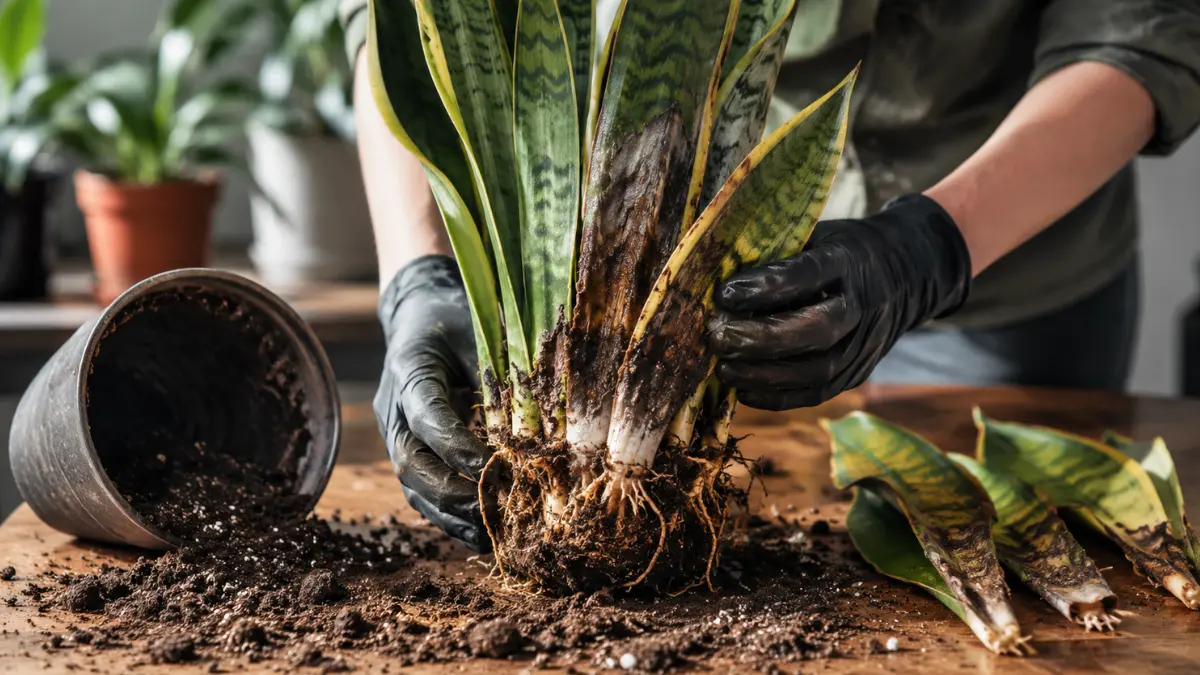
Snake plant leaves soft and mushy usually mean excess moisture has damaged the roots, rhizome, or leaf base. Stop watering, remove the plant from its pot, cut away every rotten section and repot only the firm, healthy tissue.
A mushy leaf will not become firm again. The snake plant can recover only when part of its roots, underground rhizome, crown or upper leaf remains healthy.
Why Are Snake Plant Leaves Soft and Mushy?
Snake plant leaves usually become soft and mushy when the potting mix stays wet for too long. The excess moisture damages the roots and creates conditions in which rot can spread toward the rhizome and leaf bases.
Snake plants store water inside their thick leaves and underground rhizomes. They use soil moisture more slowly than many common indoor plants.
The problem may develop even when the plant is not watered frequently. Soil can remain wet because the pot is too large, the mix holds too much moisture, or the container has poor drainage.
Common conditions that lead to mushy leaves include:
- A pot without an open drainage hole
- Water trapped inside a decorative outer pot
- Dense or compacted potting soil
- A pot much larger than the root system
- Repeated watering before the lower soil dries
- Low indoor light that slows water use
- Cool or humid conditions that slow evaporation
- A crown planted too deeply beneath the soil
The amount of water used during one watering session is not always the main problem. The greater risk comes from moisture remaining around the roots for several days.
How Can Root or Rhizome Rot Be Confirmed?
A single damaged leaf does not always mean the entire plant has root rot. The leaf base, soil, roots, and underground rhizome should be checked together.
Root or rhizome rot becomes likely when several of these signs appear:
- The leaf feels soft near the soil line.
- The leaf base looks yellow, brown, translucent, or black.
- One or more leaves lean despite moist soil.
- A leaf separates from the plant with little pressure.
- The potting mix remains wet long after watering.
- The soil produces a sour or decaying smell.
- The roots feel soft, hollow, slimy, or weak.
- The underground rhizome feels soft when pressed.
Healthy snake plant roots can appear pale, tan, yellow, or orange. Root color alone does not confirm rot.
Texture gives a clearer answer. Healthy roots and rhizomes feel firm, while rotten tissue feels soft, wet, hollow, or easily breaks apart.
What If the Leaves Are Curled but Still Firm?
Firm leaves that curl or fold inward do not show the same tissue breakdown as mushy leaves.
That symptom needs a separate diagnosis. If the leaves remain firm rather than soft, check the guide explaining why snake plant leaves curl inward.
Do not water a curled plant automatically. Curling can develop from several different conditions, while a mushy leaf base strongly points toward tissue decay.
Could Cold Damage Make a Leaf Soft?
Cold exposure can create dark, translucent, or soft patches on a snake plant leaf. This may happen when a leaf touches a cold window or remains near an air conditioner or winter draft.
Cold damage often appears on the exposed side or upper part of one leaf. Root rot more often begins near the soil line and appears with wet soil or damaged roots.
The damaged patch will not repair itself. Remove the affected part if the softness spreads, becomes wet, or starts moving toward the healthy tissue.
Can a Snake Plant Recover From Mushy Leaves?
A snake plant can recover when at least one healthy part remains.
The plant has a reasonable chance of survival when:
- Part of the rhizome remains firm.
- Several roots remain solid and intact.
- At least one leaf cluster has a healthy base.
- The rot has not entered every crown.
- A clean upper leaf section remains available for propagation.
A completely soft crown cannot recover. Extra light, fertilizer, cinnamon, or reduced watering will not restore tissue that has already broken down.
The rescue process must remove the damaged material before the decay reaches the remaining healthy sections.
How Do You Save a Snake Plant With Mushy Leaves?
Stop Watering the Plant
Do not add more water while the roots remain hidden. Additional moisture can accelerate the damage and make healthy tissue harder to identify.
Move the plant to a clean working area. Prepare a sharp knife, scissors, or pruning tool and clean the blade before use.
Remove the Snake Plant From Its Pot
Hold the plant near the soil line and gently slide the root ball from the container.
Do not pull forcefully on a soft leaf. The leaf may separate while the rotten base remains attached to the rhizome.
Squeeze the sides of a flexible plastic pot when the root ball does not release easily. A severely root-bound plant may require the pot to be cut away.
Remove the Old Potting Mix
Gently loosen the soil from around the roots and rhizomes. Remove enough of the mix to expose every damaged section.
Discard the old soil instead of using it for another plant. Soil that remained wet around rotting roots should not return to the rescued snake plant.
Clean the original pot thoroughly before reusing it. Replace the pot when it has no drainage hole or cannot be cleaned properly.
Inspect the Roots and Rhizome
Check each root by touch. Keep roots that remain firm and remove roots that feel soft, slimy, hollow, or easily lose their outer layer.
Next, inspect the rhizome. The rhizome is the thicker underground structure connecting the roots and leaf clusters.
A firm rhizome can produce new roots even after losing part of the root system. A soft rhizome section will continue to decay unless it is removed.
When several leaf clusters share the same rhizome, separate the healthy cluster from the rotten section.
Cut Away Every Rotten Section
Use the clean blade to remove mushy roots, dark leaf bases, and soft rhizome tissue.
Continue cutting until the remaining tissue feels firm. Do not stop directly beside a wet, brown, or translucent section simply to preserve more of the plant.
Clean the cutting tool after it touches rotten tissue. This prevents the blade from carrying damaged material onto a healthy division.
Remove a leaf when its base has become mushy. Keeping the upper leaf attached will not save it once decay has entered the base.
Should the Snake Plant Be Repotted or Propagated?
Repot the plant when a firm rhizome and usable roots remain.
A healthy division with only a few roots may also survive. It needs a small container because a reduced root system cannot use moisture from a large volume of soil.
Propagation becomes the better option when the entire root system and rhizome have rotted but part of a leaf remains firm.
Do not repot questionable tissue beside a healthy division. One partly rotten section can introduce the same problem into the new container.
Discard the plant when no firm root, rhizome, crown or leaf tissue remains.
What Pot Should Be Used After Removing the Rot?
Choose a clean container with at least one open drainage hole.
The pot should match the size of the remaining root system. A snake plant that lost many roots may need a smaller pot than it used before the rescue.
An oversized container holds more wet soil around roots that cannot absorb moisture quickly. This increases the risk of another rot problem.
Do not place stones or gravel beneath the potting mix as a replacement for drainage. Water must leave through an open hole in the bottom of the pot.
Do not allow the container to stand in water after watering. Empty the saucer or decorative outer pot once the excess water drains.
What Soil Should Be Used?
Use fresh, loose potting media that drains quickly and allows air to reach the roots.
A commercial cactus or succulent mix can work well for a snake plant. Coarse perlite or pumice can improve a mix that still feels dense or holds moisture for too long.
Do not use ordinary garden soil inside the pot. Garden soil can compact around the roots and drain poorly in an indoor container.
Place the remaining rhizome at approximately the same depth as before. Keep the crown and leaf bases above the soil rather than burying them deeply.
Press the mix lightly around the roots. Do not pack it tightly.
Should a Snake Plant Be Watered Immediately After Repotting?
The answer depends on how much healthy root remains and whether the fresh potting mix already contains moisture.
Do not add water when the new mix already feels moist. Allow the mix to dry before checking it again.
When the mix is dry and the plant retains several healthy roots, water carefully and allow all excess moisture to drain.
A division with very few roots needs greater caution. It cannot absorb water quickly, so soaking a large volume of soil may restart the decay.
Do not follow a weekly watering schedule after the rescue. Check the soil and water only after the potting mix has dried.
Place the recovering plant in bright, indirect light. Keep it away from harsh afternoon sunlight, cold windows, air conditioner airflow, and dark corners.
Can a Healthy Leaf Section Be Propagated?
A firm upper leaf section may produce a new snake plant when the roots and rhizome cannot be saved.
Remove every yellow, brown, translucent, or soft part first. Only clean and firm tissue should enter the propagation medium.
Cut the healthy leaf into sections approximately 3 to 4 inches long. Mark the end that originally faced the base of the plant.
Insert the lower end of each section into a clean, airy propagation mix. Planting the section upside down can prevent successful rooting.
Keep the medium slightly moist rather than wet. A leaf cutting without roots cannot use large amounts of water.
Variegated snake plants may lose their yellow or patterned edges when grown from leaf sections. Dividing a healthy rhizome preserves the original pattern more reliably.
Why Do the Leaves Become Mushy Again After Repotting?
New softness usually means rotten tissue remained on the plant or the replacement soil stayed too wet.
The problem may return when:
- Part of a soft rhizome was left attached.
- The plant entered an oversized container.
- The original soil was reused.
- The pot had poor drainage.
- The fresh mix remained saturated.
- The crown was buried too deeply.
- Water collected beneath the pot.
- The plant remained in a cold or dark position.
Inspect the plant again when another leaf base starts becoming soft. Drying only the soil surface will not stop rot that remains inside the rhizome.
How Can Mushy Snake Plant Leaves Be Prevented?
Allow the potting mix to dry before watering again. Check below the surface because the top layer can feel dry while the lower soil remains wet.
Use a container with an open drainage hole and remove collected water after every watering.
Keep the plant in bright, indirect light so it can grow and use moisture normally. A snake plant in low light needs water less frequently than one growing in brighter conditions.
Avoid moving the plant into a much larger pot during routine repotting. A slightly snug container dries more predictably than an oversized pot.
Water according to the soil condition rather than a fixed calendar. Drying time changes with light, temperature, humidity, pot size and season.
Frequently Asked Questions
Can mushy snake plant leaves become firm again?
No. Mushy tissue has already broken down and cannot become healthy again. The plant must recover through firm roots, a healthy rhizome, an unaffected crown, or a clean leaf cutting.
Should a snake plant be watered after removing root rot?
Do not water when the new potting mix already feels moist. When the mix is dry and healthy roots remain, water carefully and allow all excess moisture to drain.
Why did my snake plant become mushy after repotting?
The new pot may be too large, the soil may retain too much moisture, or part of the rotten rhizome may have remained attached. Poor drainage and deep planting can also restart the problem.
