
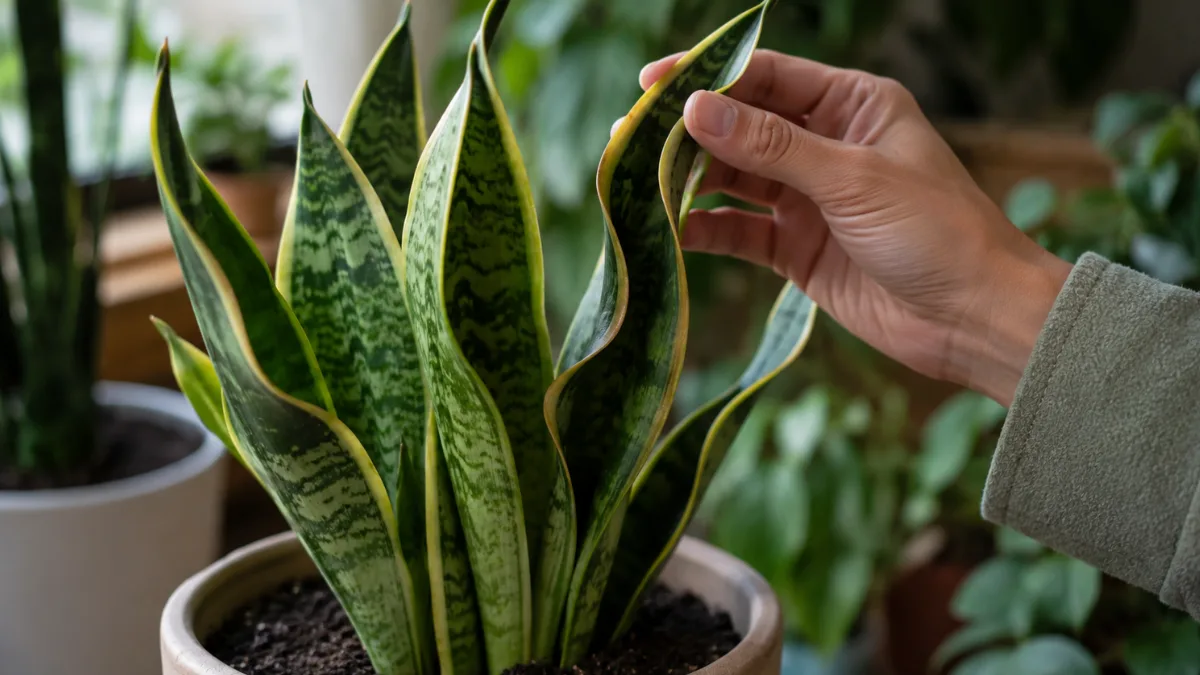
Snake plant leaves curling inward usually point to water stress. Check the potting mix before watering because completely dry soil suggests dehydration, while soil that stays wet can indicate roots that are no longer working properly.
Start by checking three things: the moisture below the soil surface, the texture of the curled leaves and the condition of their bases. These checks help separate simple dryness from a more serious root problem.
Are the Leaves Actually Curling Inward?
A curled snake plant leaf folds lengthwise, bringing both outer edges toward the centre. The leaf may look narrower than usual or form a shallow channel from the base toward the tip.
This differs from a leaf that merely leans, bends sideways or grows with a natural twist. Some snake plant varieties naturally produce curved or twisted foliage.
Compare the affected leaf with older leaves on the same plant. A recent change in shape is more useful for diagnosis than a leaf that has always been curved.
A single curled leaf does not always indicate a plant-wide problem. Several leaves developing the same inward fold at the same time provide stronger evidence of stress.
Is the Potting Mix Completely Dry?
Prolonged dryness is the first cause to check. Snake plants store moisture in their thick leaves, so they may tolerate dry soil for a long period before the foliage changes.
When the root ball remains dry for too long, the leaves can lose firmness, wrinkle and fold inward.
Do not judge moisture from the surface alone. Push a wooden skewer several centimetres into the potting mix, check through a drainage hole or lift the pot and compare its weight with its weight soon after watering.
Dryness is more likely when:
- The pot feels much lighter than usual
- The soil has pulled away from the container
- The curled leaves feel wrinkled or leathery
- The root ball feels dry below the surface
- Water runs through gaps without soaking the soil
When most of the root ball is dry, water slowly and thoroughly. Apply a small amount first, allow it to absorb and then continue until excess water drains from the bottom.
Empty the saucer or decorative outer pot afterward.
Do not follow this with daily watering. Wait until the potting mix dries again before the next watering. The goal is to rehydrate the complete root ball, not keep it continuously damp.
What If the Soil Is Wet and the Leaves Are Curling?
Do not add more water when the soil remains wet. A snake plant in wet soil can look dehydrated when unhealthy roots can no longer move enough water into the leaves.
Check how long the soil has stayed wet. A large pot, dense potting mix, poor drainage or water trapped inside a decorative cover can keep the root zone saturated.
Warning signs include:
- Wet soil several days after watering
- A pot that remains unusually heavy
- Yellowing alongside the curling
- A soft or unstable leaf base
- An unpleasant smell from the pot
- Standing water inside an outer container
Remove any standing water and stop watering while the mix remains wet.
When the leaf bases feel soft or the roots smell unpleasant, the plant needs a root inspection. This is no longer ordinary underwatering, and adding more water can worsen the damage.
This article does not cover complete root-rot treatment because inward curling is only one possible symptom. The important step is recognising when wet soil requires a different response from dry soil.
Is Water Missing the Centre of the Root Ball?
Old potting mix can shrink away from the container or become difficult to wet evenly. Water may run through gaps around the edge while leaving the centre dry.
This can make the plant appear properly watered even though some of the active roots receive very little moisture.
Check the centre of the potting mix shortly after watering. When the outer soil feels damp but the inner root ball remains hard and dry, poor water distribution may be causing repeated dehydration.
Rewet the soil slowly in two or three passes. Allow each application to absorb before adding more water. Stop when water begins draining from the bottom.
Replace the potting mix when it repeatedly rejects water, has become hard and dense or no longer drains predictably.
Use a loose, well-draining mix and a container with at least one open drainage hole. Do not compress the new mix tightly around the roots.
Is the Snake Plant Severely Root-Bound?
Snake plants tolerate being slightly crowded. Roots visible through a drainage hole do not automatically mean that the plant needs a larger pot.
A severely crowded root system can leave too little soil to hold moisture. The remaining potting mix may dry soon after watering, causing repeated dehydration symptoms.
Repotting becomes reasonable when several signs appear together:
- Thick rhizomes distort or crack the pot
- Roots occupy almost the entire container
- Very little usable soil remains
- Water passes through immediately
- The root ball dries soon after thorough watering
Move the plant up by only one pot size. A much larger container holds more wet soil around the roots and can create the opposite problem.
Do not repot because one leaf has curled. First confirm that the roots have displaced most of the potting mix or physically damaged the container.
Can Direct Sun or Hot Air Make the Curling Worse?
Strong heat can accelerate water loss from the pot and leaves. This becomes more likely when curling begins after the plant moves to a hot window, balcony or outdoor location.
Look for supporting signs such as dry soil, faded patches or scorched areas on the side facing the strongest light.
Curling without dry soil or visible surface damage is not enough to blame sunlight.
Move the plant away from harsh afternoon sun and provide bright, indirect light. Introduce stronger light gradually instead of moving the plant directly from a dim room into intense sunlight.
Direct air from a heater or air conditioner can also create unstable conditions. Move the plant out of the airflow, but continue checking the soil before changing the watering routine.
Cool indoor conditions can slow soil drying, while warm airflow can make it dry faster. The condition of the potting mix should determine whether the plant needs water.
Could Pests Be Distorting the Leaves?
Pests are less likely than a moisture problem, but they deserve attention when new leaves curl unevenly or show visible damage.
Inspect both sides of the leaves, their central grooves and the places where they emerge from the soil.
Look for:
- Fine webbing
- White cotton-like clusters
- Pale speckling
- Sticky residue
- Small moving insects
- Distorted new growth
Snake plants can develop mealybugs or spider mites. Separate a suspicious plant from nearby houseplants while checking it more closely.
Wipe accessible leaf surfaces with a damp cloth. When pests are clearly present, use a product labelled for the identified pest and suitable for indoor ornamental plants.
Follow the product label exactly.
Do not spray oils, soaps or homemade mixtures when no pest evidence is visible. These treatments will not correct dry soil, wet roots or temperature stress.
Will the Curled Leaves Become Straight Again?
Mildly curled leaves may regain some firmness after the correct moisture problem is fixed. Leaves with deep folds, scars or permanent creases may remain partly curled.
Do not remove a leaf simply because its shape no longer looks perfect. A leaf that remains green and firm can continue supporting the plant.
Remove a leaf only when its base becomes soft, the tissue continues deteriorating or severe pest damage makes the leaf difficult to manage.
Use a clean cutting tool and avoid damaging nearby leaves.
Judge recovery mainly by the condition of later growth. Fresh leaves that emerge firm and normally shaped show that the underlying problem has been corrected, even when older curled leaves do not fully flatten.
How Should a Curled Snake Plant Be Recovered?
Correct only the problem supported by the plant’s condition.
When the soil is dry, water the complete root ball and allow the excess to drain. When the soil is wet, stop watering and investigate the drainage and root condition.
When water cannot penetrate the soil evenly, rewet it slowly or replace the degraded potting mix.
Move the plant only when direct heat, strong sunlight or concentrated airflow supports the diagnosis. Treat pests only after finding visible pest evidence.
Do not fertilise the plant during the initial recovery. Fertiliser cannot correct a moisture or root problem and may add further stress.
After making the appropriate correction, keep the conditions stable. Avoid repeatedly moving, watering, repotting and treating the plant at the same time because multiple changes make the response difficult to judge.
How Can Inward Curling Be Prevented?
Allow the potting mix to dry before watering, then water deeply enough to wet the complete root ball.
Avoid frequent small amounts of water that moisten only the upper soil.
Use a container with drainage holes and empty any water left in the saucer or decorative cover. Replace potting mix that has become compacted, water-repellent or consistently slow to drain.
Keep the plant in bright, indirect light and away from sudden heat or cold drafts. Inspect new leaves periodically for webbing, cotton-like deposits or unusual distortion.
Most importantly, determine whether the soil is dry or wet before responding to curled leaves. The same visible symptom can require opposite treatments, and the soil condition provides the safest starting point.
